
Glenveagh National Park Hometree Study Visit
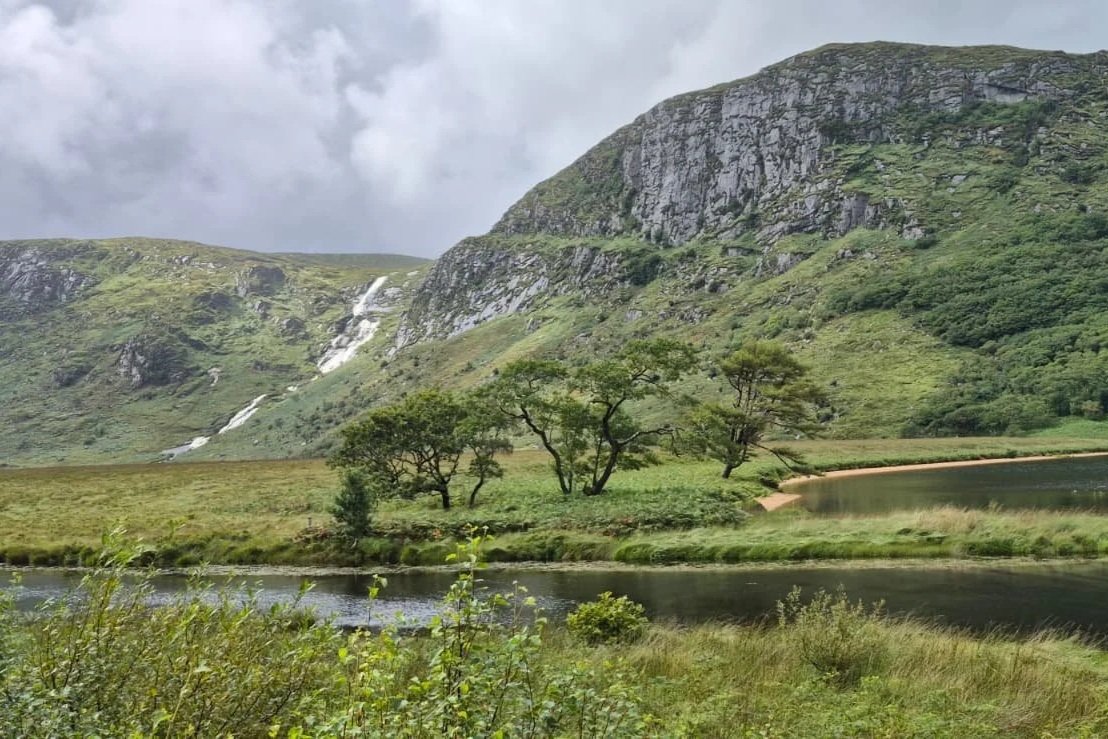
Gleanveagh National Park
A group of Hometree technical staff recently travelled to Glenveagh National Park for a knowledge-sharing study visit with the park team. Participants included colleagues from the Iveragh Woodlands project, Hometree’s woodland restoration and deer management teams, alongside members of FRS’s Deer Management Unit.
The visit provided an opportunity to see how similar ecological and regulatory challenges are being approached in a different context. Glenveagh is predominantly public land, while Hometree works primarily in partnership with private landowners, but there are strong parallels between the landscapes: blanket bog, wet and dry heath, remnants of native oak woodland, heavy grazing pressure, invasive species, drainage impacts and extensive SAC and SPA designation.
We spent the day with Emmet, Martin and the wider Glenveagh team, who were extremely generous with their time and knowledge. Their approach was notable for its combination of ecological ambition, practical land management, evidence gathering and a strong sense of responsibility for the land in their care.
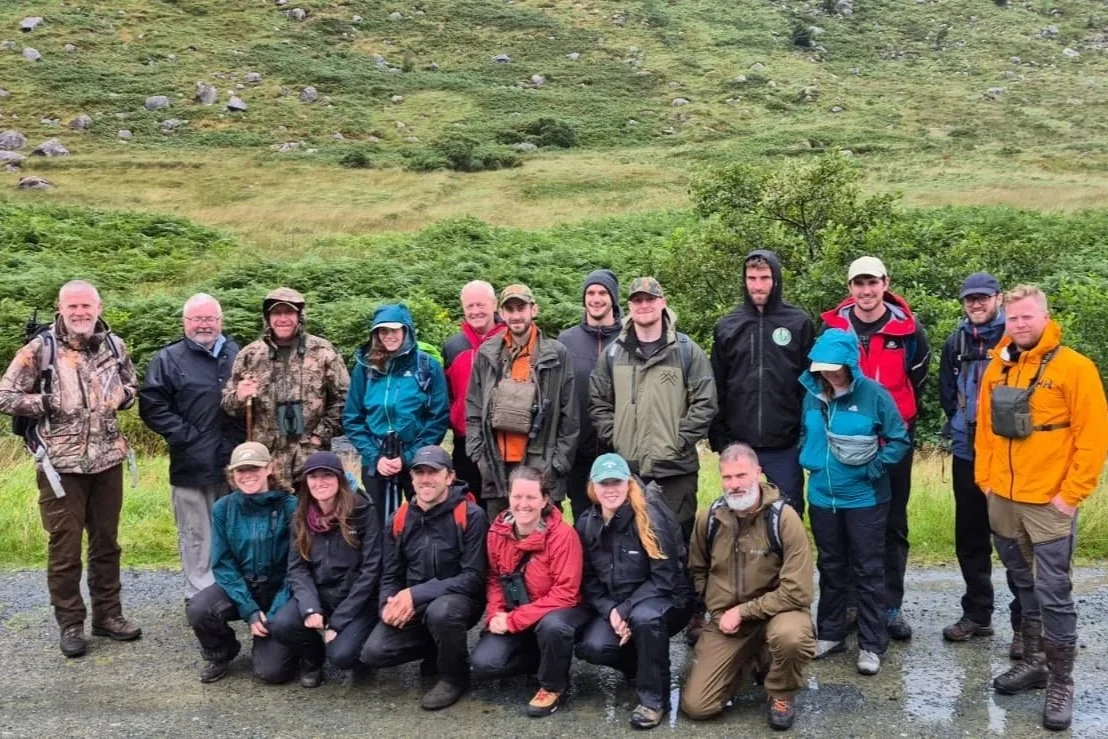
Hometree team and members of FRS’s Deer Management Unit, Glenveagh National Park
High-level takeaways
1. Manage deer for ecological outcomes, not cull numbers
One of the clearest lessons from the day was that deer management should ultimately be judged by the ecological response, particularly whether woodland regeneration is establishing and surviving.
Glenveagh uses active deer control, but the emphasis is not simply on numbers shot. Young tree abundance and regeneration are being used as indicators of whether grazing pressure is sufficiently low, and NPWS stalkers are involved in follow-up monitoring of regeneration plots. This creates a useful feedback loop between management effort and ecological outcome.
For Hometree, this raises an important question around whether restoration schemes should support deer management and stalking as an alternative or complement to fencing, particularly across large upland landscapes where fencing is impractical or undesirable.
2. Natural regeneration can be extremely effective where pressures are reduced
The visit reinforced the potential of natural regeneration where browsing pressure is controlled and suitable seed sources are nearby.
Several exclosures demonstrated significant woodland recovery in the absence of grazing. Birch, rowan and holly were regenerating readily, and in some cases densities appeared comparable with, or greater than, those expected through planting.
The wider principle is important: before asking what needs to be planted, restoration should first ask what is preventing the landscape from recovering naturally. Glenveagh generally appears to favour natural regeneration over planting where suitable seed sources exist. This is particularly relevant to Hometree’s work in upland landscapes where remnants of native woodland may provide the basis for future expansion.
3. Seed source and landscape context may matter as much as habitat classification
A recurring observation was that regeneration potential cannot necessarily be understood from habitat classification alone.
Proximity to existing woodland, prevailing wind, vegetation structure and microsite all appear to influence where trees establish. Old oak woodland remnants within Glenveagh are therefore important not only as habitats in their own right, but as seed sources for future woodland expansion.
Regeneration also appeared stronger in some areas of leggy heather than in more uniform Molinia-dominated ground, reinforcing the importance of understanding microsite conditions rather than treating upland vegetation as homogeneous.
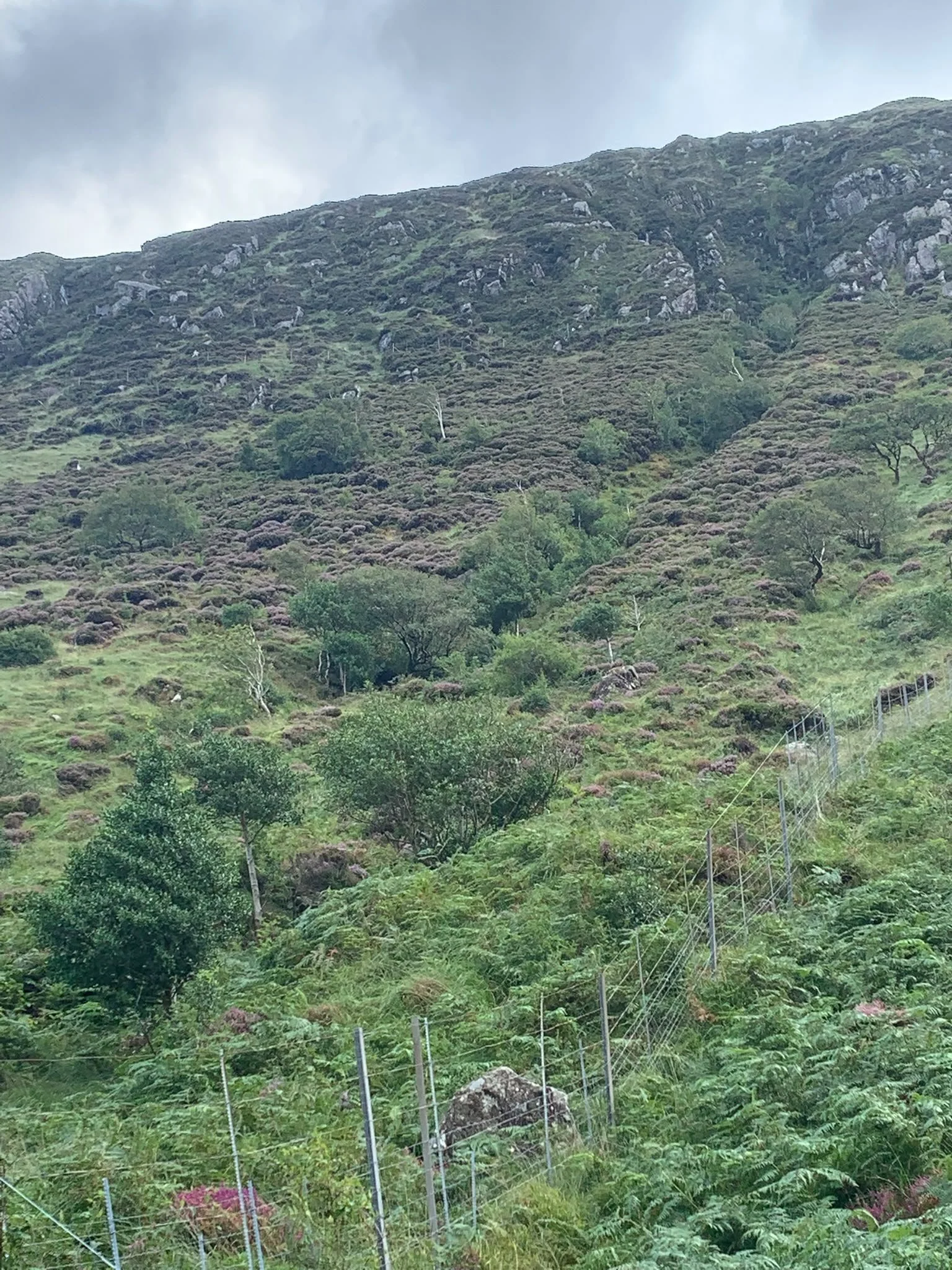
Natural regenerating oak woodland within a fenced enclosure
4. Exclosures are valuable as experiments as well as protection
Large-scale fencing is often impractical in upland landscapes, but small exclosures can play a particularly useful role.
Glenveagh has a number of fenced exclosures, including long-standing examples that allow direct comparison between grazed and ungrazed areas. These are valuable not only for protecting regeneration but also as demonstration and monitoring sites.
For restoration projects, small exclosures can help answer a basic question: what would this landscape do if grazing pressure were substantially reduced?
They can therefore provide ecological evidence, demonstrate latent regeneration potential and communicate the effect of herbivore pressure very clearly to land managers, funders and policymakers.
5. Restoration needs to work with ecological trajectories, not simply preserve current habitat states
One of the most important discussions concerned the relationship between wet heath, woodland and natural succession.
Woodland is clearly not the appropriate endpoint everywhere, and restoration needs to respond to hydrology, existing habitats and ecological context. However, there are also places where reducing grazing or other pressures may naturally result in succession towards scrub or woodland.
This creates a genuine tension within designated landscapes. Conservation frameworks often focus on protecting the habitat currently present, while restoration may require allowing ecosystems to change.
A key question emerging from the visit is therefore:
How should natural ecological succession be treated where a currently designated open habitat may naturally transition towards woodland?
This appears particularly relevant in landscapes where current habitat condition is itself the product of historic deforestation, drainage or sustained grazing.
6. Distinguish carefully between legislation, policy and institutional convention
A particularly useful lesson from the Glenveagh team was the importance of understanding exactly what the law requires before accepting that a restoration intervention cannot proceed.
The overlap between SAC and SPA designations can create real challenges for active restoration. Previous woodland proposals have encountered constraints, including concerns around planting wet heath. However, the wider lesson was to distinguish between:
statutory requirements;
policy and guidance;
administrative interpretation;
institutional convention.
Where an intervention is genuinely prohibited, that needs to be respected. But where there is uncertainty, restoration organisations should establish which body has the relevant authority, what legislation is actually being applied, and whether the perceived constraint is genuinely legal.
This confidence needs to be backed by ecological evidence and good professional advice.
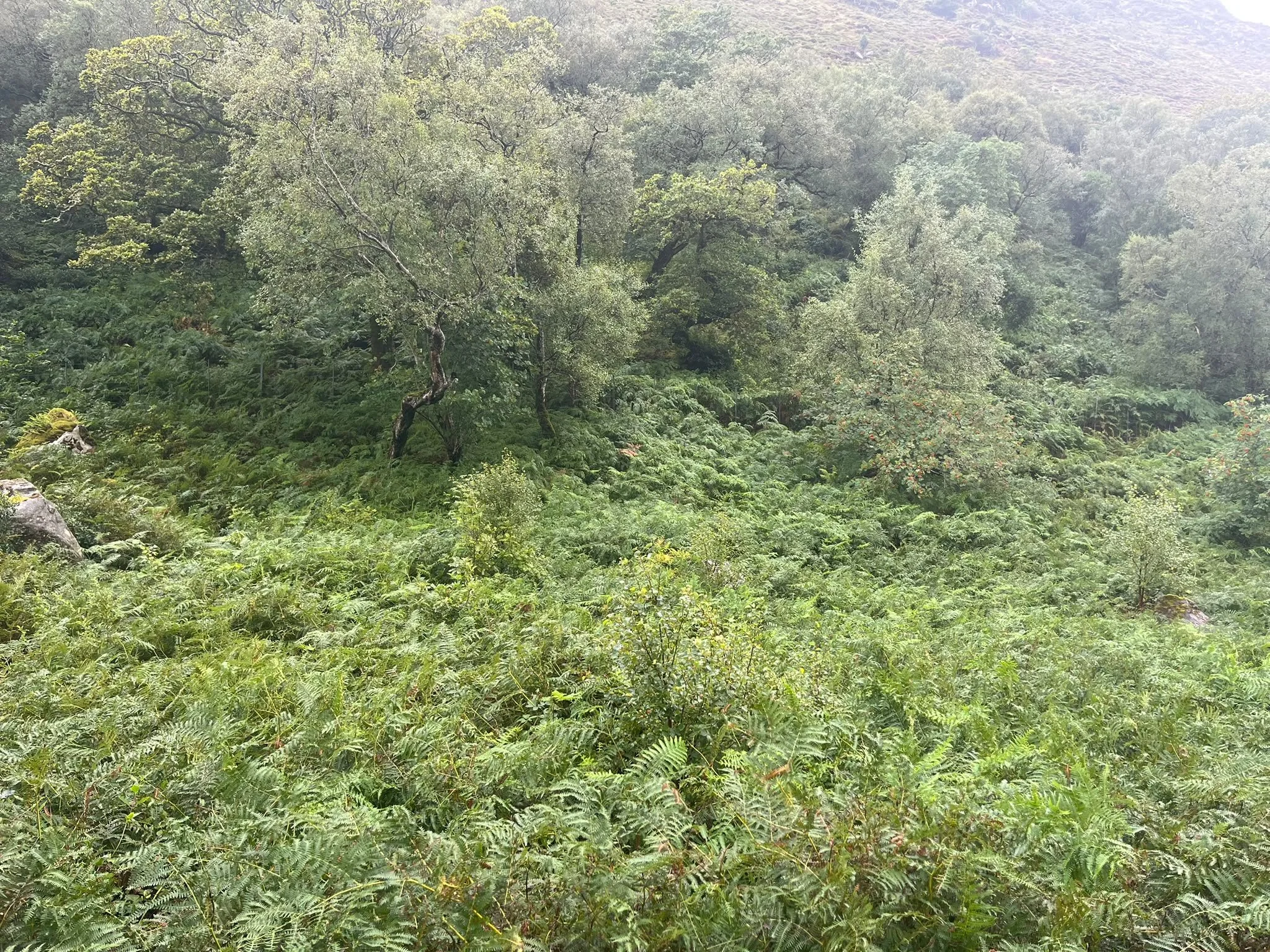
Natural regeneration through bracken
7. Evidence creates the confidence to be ambitious
Glenveagh’s approach appears to be supported by a combination of internal expertise, technical reports and long-term monitoring. An important point raised during the visit was that simply arguing that more woodland would be beneficial is unlikely to be sufficient. The ecological case needs to be demonstrated.
This creates a strong link between restoration ambition and evidence gathering. Monitoring, research and historic information allow a land manager to make a stronger case for change, particularly within designated landscapes.
The underlying lesson is not to be cavalier about regulation, but to build enough evidence to confidently defend the ecological rationale for restoration.
8. Monitoring should be simple, permanent and linked to management decisions
Glenveagh’s woodland monitoring system provides a useful model.
The park has approximately 62 monitoring plots, including fenced and unfenced locations. Plots are 20 m × 20 m, with permanent markers, repeat photographic points and standard survey sheets. Monitoring includes woodland interior, woodland edge and areas outside woodland.
Crucially, the monitoring is designed to answer management questions, including whether regeneration is surviving above browsing height and whether deer management is working.
The lesson for Hometree is that restoration monitoring does not necessarily need to capture everything. It should focus on the minimum set of indicators capable of showing whether ecological recovery is occurring and whether management needs to change.
9. Restoration pressures should be treated as part of a system
The visit highlighted how deer, drainage, invasive species, fire, seed availability and historic land use interact.
Rhododendron removal, for example, is not being treated simply as invasive-species eradication. It is being considered in the wider context of enabling woodland regeneration.
Similarly, peatland restoration combines physical interventions such as coir, wooden and peat dams with post-restoration monitoring of water levels and vegetation response. This supports a broader principle: restoration should be organised around ecological outcomes rather than separate programmes of works.
Each site should ideally have a clear restoration action or management plan that identifies the pressures preventing recovery, the interventions required and the indicators that will demonstrate success.
10. Large restoration challenges benefit from being broken into manageable stages
Glenveagh’s approach to rhododendron control was a useful practical example.
Five-year contracts allow work to be phased through initial intervention, removal of flowering plants, follow-up control and eventual eradication targets.
This has both operational and psychological value. Large ecological problems can appear overwhelming when considered as a single task, but they become more manageable when divided into clear stages with milestones.
The same principle has relevance across woodland, peatland and invasive-species restoration.
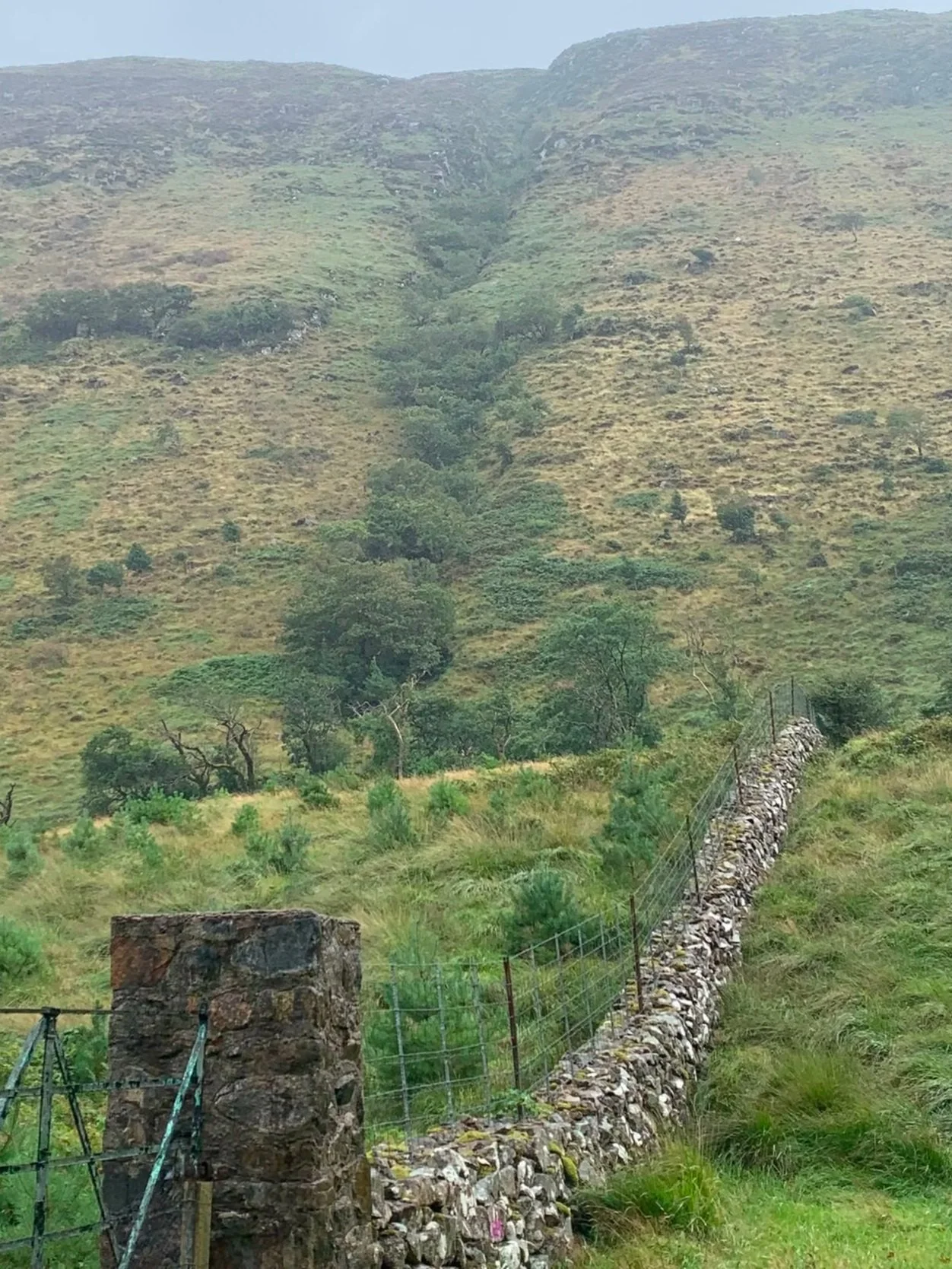
Gully woodlands expanding due to reduced grazing pressure
11. Demonstration sites can be disproportionately valuable
A recurring theme across both woodland and peatland work was the value of demonstration areas.
Exclosures allow visitors to see the effect of reduced grazing. Peatland restoration sites allow stakeholders to see physical interventions and their ecological response.
These sites provide evidence, support learning and make restoration tangible for landowners, policymakers, researchers and the public.
For emerging restoration approaches, a well-chosen demonstration site may sometimes communicate more effectively than a technical report.
12. Restoration requires a different institutional mindset from conventional conservation
Perhaps the strongest overall takeaway from Glenveagh was cultural. Traditional conservation can sometimes focus primarily on retaining what is currently present. Ecological restoration requires a willingness to consider what a landscape could become if the pressures preventing recovery were addressed.
The Glenveagh team appeared willing to question assumptions, understand the regulatory position carefully, gather evidence and then make the case for restoration.
Their position was not that woodland should expand everywhere. Rather, it was that there is likely to be substantially greater woodland potential within the landscape than currently exists, and that this should be investigated and supported where ecologically appropriate.
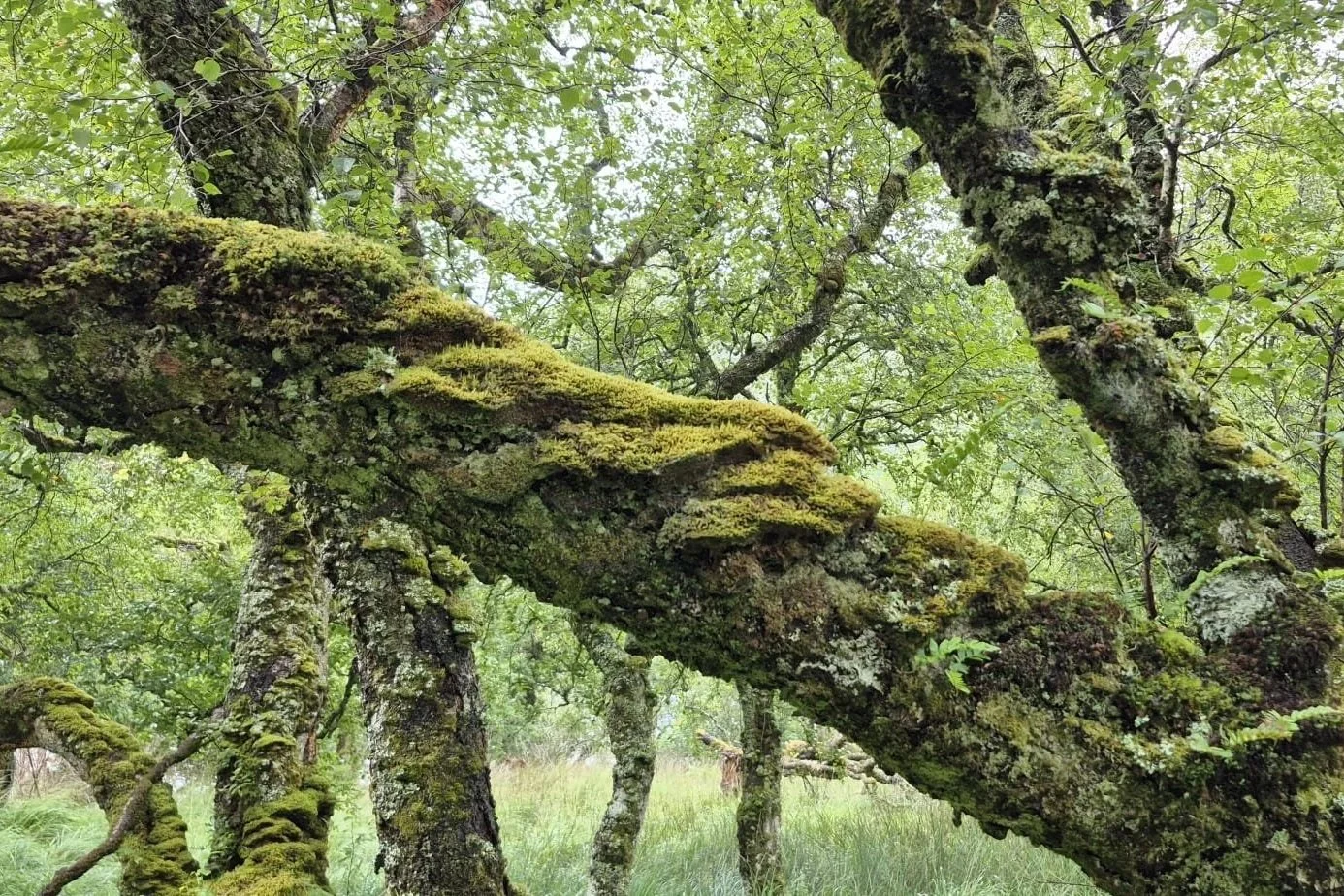
Glenveagh National Park
Overall conclusion
The visit reinforced a relatively simple restoration philosophy:
Understand the landscape. Identify the pressures preventing recovery. Reduce those pressures. Allow natural processes to do as much of the work as possible. Monitor the response. Intervene further where necessary.
Alongside this sits an equally important institutional lesson:
Start with the ecological outcome that is appropriate for the site, establish what the law genuinely allows, build the evidence for that outcome, and make the case for it confidently.
All in all, a great trip despite different ownership and delivery contexts. Glenveagh’s experience on public land provides useful evidence and practical lessons for Hometree’s work with private landowners across similarly complex upland landscapes.