If Nature Is Our Most Precious Asset, Why Don't We Invest in It?
Three years ago, we wrote about our concerns with the voluntary carbon market.
At the time, we were seeing a growing number of companies looking for quick, low-cost offsets. Too often, carbon credits appeared to offer a simple answer to a complex challenge. We worried that buying credits risked becoming a substitute for the harder work of reducing emissions at source.
Those concerns were real, and many remain relevant today. But over time, it has become clear that the bigger question is not simply about carbon markets. It is about how we value nature itself.
The Problem is How We Account for Nature
Healthy ecosystems provide enormous benefits to society. They store carbon, regulate water, support biodiversity, reduce flood risk, improve soil health and contribute to our wellbeing and cultural identity. Yet most of these benefits remain invisible in the economic systems that shape decision-making. A standing woodland provides value every day. But historically, that value has been difficult to recognise, measure or finance. As a result, nature is often treated as if it were free.
"We use nature because it is valuable, but we lose it because it is free." Pavan Sukhdev - Founder of The Economics of Ecosystems and Biodiversity (TEEB) initiative and former head of the United Nations Green Economy Initiative.
This is one of the fundamental challenges facing conservation and restoration today.
A Growing Movement to Value Nature
Across the world, governments, businesses, investors and conservation organisations are exploring new ways to recognise the value of nature within economic systems. This includes concepts such as natural capital, ecosystem services, biodiversity markets and carbon finance.
This shift is increasingly reflected in mainstream economic thinking - the landmark Dasgupta Review described nature as "our most precious asset" and argued that economies have systematically failed to account for the value of the natural world. As a result, nature is frequently treated as an externality rather than a foundational asset on which our prosperity depends.
Many of the approaches now emerging are attempts to address that imbalance by creating new ways to recognise, measure and invest in the benefits that healthy ecosystems provide. These new approaches vary in their maturity, acceptance and indeed, success. Some are occurring within financial and business systems. The Taskforce on Nature-related Financial Disclosures (TNFD), for example, is encouraging companies and investors to assess how their activities depend on and impact nature. Much as climate risk has become a mainstream business consideration, nature-related risks are increasingly moving into investment decisions.
Others reflect a broader shift in how society understands the value of the natural world. In New Zealand, the Whanganui River has been granted legal personhood, recognising that nature can have value beyond its immediate economic use.
While these examples are very different, they point in the same direction: a growing recognition that nature is not an externality to be managed, but the foundation that underpins our economy, wellbeing and future prosperity.
For organisations like Hometree, working on landscape-scale restoration, this conversation matters. Philanthropy remains essential, but, if we are serious about restoring nature at scale, we also need to find ways to attract either public or private capital into the landscapes and ecosystems on which we all depend.
Some describe this shift as the emergence of "nature as an asset class"- an attempt to recognise that healthy ecosystems create real, long-term value for society. Whether or not that terminology endures, the principle is simple: healthy ecosystems require long-term investment if they are to recover and thrive.
Carbon Markets Are Maturing
Carbon markets are one of the earliest mechanisms emerging from this broader effort to value and invest in nature. One of the most significant developments in recent years has been the effort to improve standards and accountability within voluntary carbon markets. The Integrity Council for the Voluntary Carbon Market (ICVCM) has introduced Core Carbon Principles designed to establish a global benchmark for quality. Verification standards have also continued to evolve, improving how projects are monitored and assessed over time.
We are also seeing greater scrutiny of buyers. Many organisations purchasing carbon credits are now expected to follow clear mitigation hierarchies, reducing their own emissions first and using carbon removals only for residual emissions that cannot yet be eliminated.
This doesn't solve every challenge, but it represents a significant step forward from the market conditions that existed only a few years ago.
The Irish Context
Despite these developments, nature restoration in Ireland presents unique realities.
Time
Nature operates on timescales that don't always align with corporate reporting cycles. Native woodland restoration is measured in decades, not years. In the Irish uplands, a native oak tree may take decades to deliver significant carbon sequestration. The ecological benefits of restoration often emerge long before the carbon story is fully realised.
Carbon Is Only Part of the Story
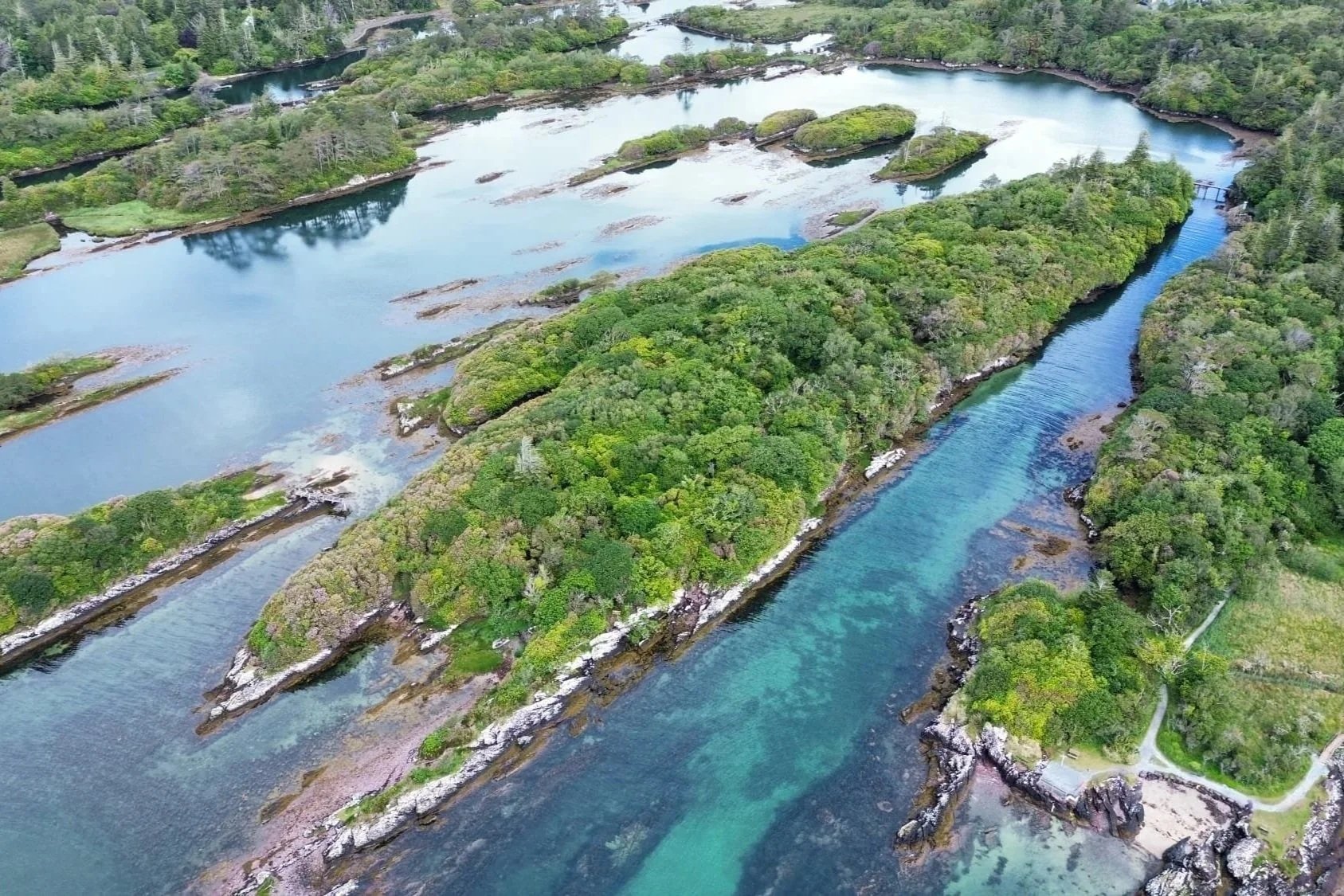
Carbon is useful because it can be measured, monitored and verified, but it is not the sole measure of success. At Hometree, our goal is the recovery of Ireland's Atlantic rainforest ecosystem - its biodiversity, rivers, soils, wildlife and cultural significance. Carbon can help us understand part of that journey, but it cannot fully capture the value of a living landscape.
Long-Term Stability
Nature restoration requires patient, reliable investment over decades. While voluntary carbon markets continue to mature, they remain relatively small and can be heavily influenced by a handful of major buyers. Microsoft's recent decision to pause parts of its carbon removal purchasing programme is a reminder of how quickly market conditions can change.
Carbon finance can help create accountability, support restoration and direct investment towards landscapes that have historically been undervalued, but for now nature recovery will require a broader mix of public, private and philanthropic investment.
Looking Ahead
Our focus remains unchanged. We are committed to restoring native woodlands, supporting biodiversity, working with farmers and communities, and helping recover Ireland's temperate rainforest landscapes. We remain interested in all approaches that can help deliver those outcomes with integrity, transparency and long-term commitment.
In the absence of a mature biodiversity credit market, carbon remains a valuable tool for Monitoring, Reporting and Verification (MRV), helping to track progress and hold projects accountable over the long term. It may play a legitimate role in financing and measuring restoration, but it cannot capture the full value of a living landscape.
Ultimately, the future of restoration depends on more than carbon. It depends on building a world where nature is recognised not as an externality, but as a foundational asset that supports our climate, economy and communities. We cannot build a resilient economy on a depleted landscape.