Project Update: Iveragh Woodlands EIP - Returning Trees to the Uplands
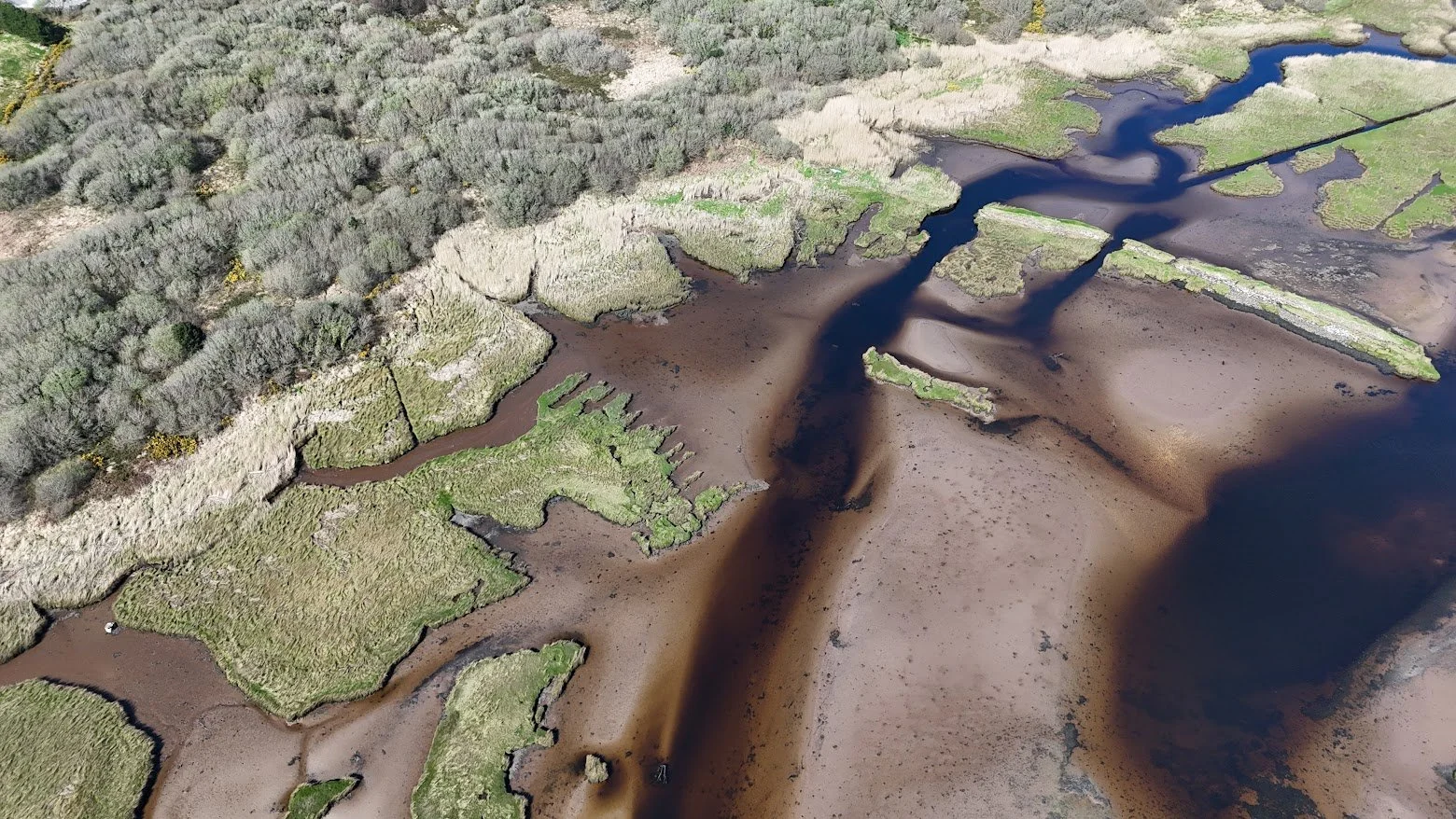
Native willow woodland on wetland near the Inny, Ballinskelligs.
In this article, Ray Ó Foghlú, Iveragh Woodlands Project Lead, explains the problems we are trying to solve through the Iveragh Woodlands EIP, and share an update on how we are getting on.
What is this project really trying to do?
At its simplest, the Iveragh Woodlands EIP is trying to find an appropriate way to bring native woodland back into parts of Ireland’s uplands.
Although we have become unfamiliar with seeing trees at elevation, woodlands once formed a natural part of many upland landscapes. They were gradually cleared over thousands of years. The farming systems that subsequently developed in these areas, particularly in the last century, mean that woodland is generally unable to return by itself.
As a result, many of our uplands remain almost completely devoid of trees.
Most ecologists would agree that native trees and woodland have a legitimate role in these landscapes. The challenge is working out how to restore them in a way that is in line with the law, ecologically coherent and beneficial to the people who own and manage the land.
We are not talking about creating commercial plantations. We are talking about restoring natural native woodland: scattered trees, scrub, woodland edges and areas of more developed woodland, located in the right places and established using methods which are sensitive to the ecology of each site.
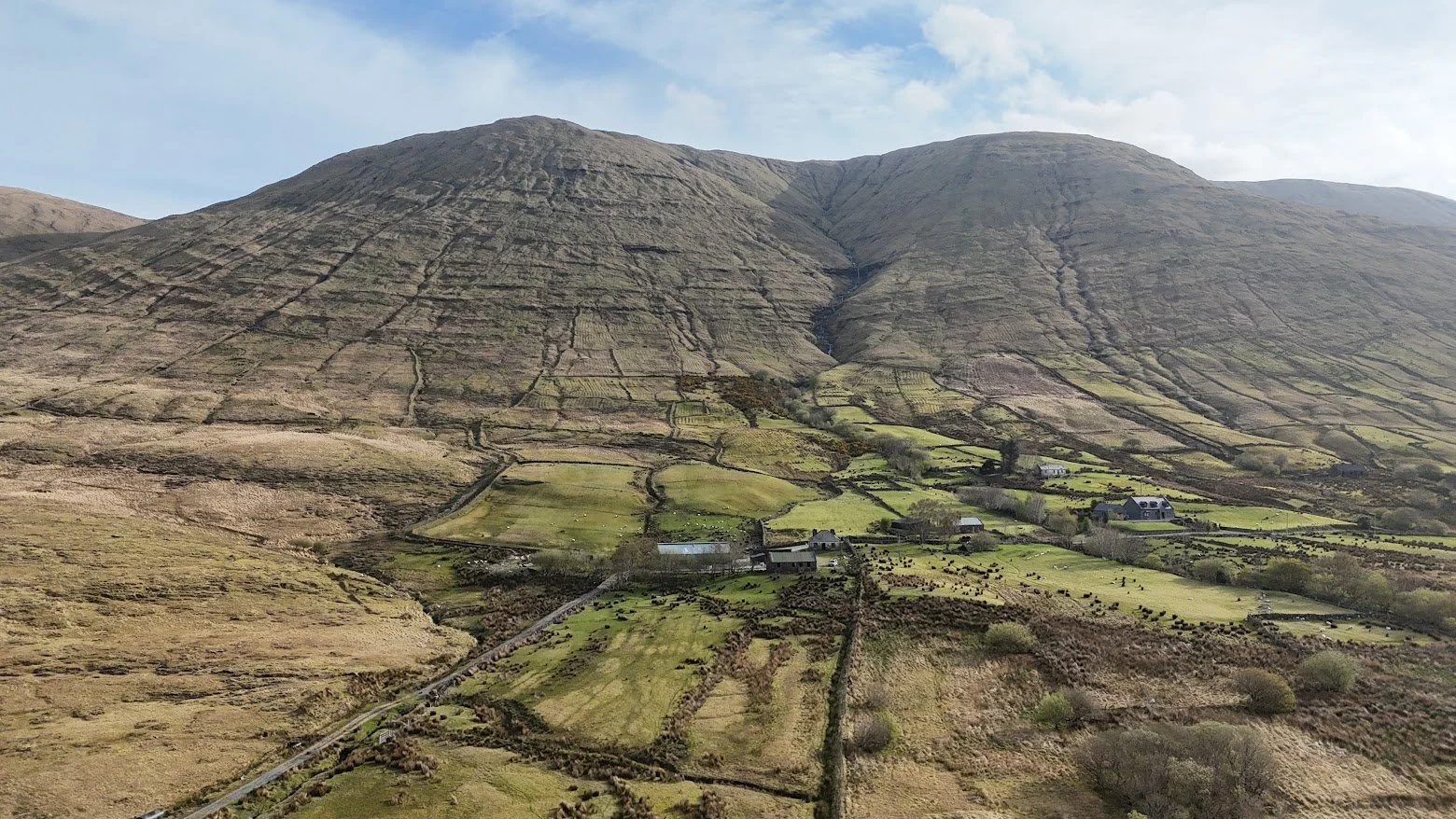
We dont currently have a policy mechanism to determine the role for trees in upland landscapes like this, Seanadh Farracháin, Gaillimh.
Why is bringing trees back so difficult?
There are several overlapping reasons.
The first is that forestry policy in Ireland has traditionally been shaped by a production-based mindset. Forestry support systems demand sites capable of fast growth rates, entirely irrelevant to woodlands for nature.
Many upland areas do not fit comfortably within that model. The soils may be shallow, the land may be steep or difficult to access. Incredibly one of the regulation mandates a maximum amount of bare rock on the surface. Anyone who has experienced upland oak or birch woodland know they can often grow on almost bare rock.
The second reason is environmental sensitivity.
Many upland landscapes are now protected for important non-woodland habitats including heathlands, grasslands, peatlands.and rare bird species such as merlin or hen harrier, These habitats and species are valuable in their own right and are protected through Irish and European environmental law.
That means we cannot simply decide that trees should be planted across an upland area. Woodland restoration must be carefully targeted. We need to understand where trees naturally belong, where woodland can be restored without damaging existing habitats, and where trees should not be introduced at all.
The third challenge is cultural. Ireland does not have a strong recent culture of native woodland custodianship, particularly in upland farming areas. Landowners, advisers, regulators and communities are understandably more familiar with the existing landscape and established farming systems than they are with the idea of restoring naturally functioning woodland.
This unfamiliarity can create uncertainty, even where there is genuine interest in the project.
The combined effect of these constraints is that there is currently no policy mechanism to restore woodlands to our uplands.
The purpose of the Iveragh Woodlands EIP is therefore not simply to plant trees. It is to develop a workable pathway for restoring native woodland within sensitive upland landscapes.
A central part of that pathway is ensuring that woodland restoration also works for landowners. Any successful approach must respect farming livelihoods, recognise the role landowners play in managing these landscapes and provide appropriate financial support for the actions they undertake.
What progress have we made?
The project has developed significant momentum over the past year.
We recruited a Kerry based team that includes ecological, project management and community engagement expertise. The team then began reaching out to landowners through marts, community halls, newspapers and local networks.
The response was extremely encouraging.
Around 70 landowners contacted the project to express an interest in taking part. That level of interest shows that there is a real appetite among farmers and landowners to explore new approaches to managing land and restoring nature.
We then began the careful process of assessing those expressions of interest.
Some sites were too small for the project. Others were unsuitable because they contained deep peat, sensitive habitats or other legitimate ecological and practical constraints.
From the initial group, we have now selected 15 sites to progress to the next stage.
These sites are now being screened against a range of criteria. We have looked at soils, existing habitats, surrounding ecology, access, land management and the potential for woodland to establish without damaging other important environmental features.
We are now working directly with the participating landowners to map their land and develop detailed woodland restoration plans for each site.
This work is being supported by the project’s Operational Group, which includes representatives from the National Parks and Wildlife Service, Teagasc, Munster Technological University and other technical and local partners.
The goal is to turn the ecological potential of each site into a practical and implementable action plan.
Depending on the site, this may include fencing, reducing grazing pressure, controlling invasive species, managing deer, supporting natural regeneration or carrying out carefully targeted planting.
We hope to begin implementing the first of these plans in early 2027.
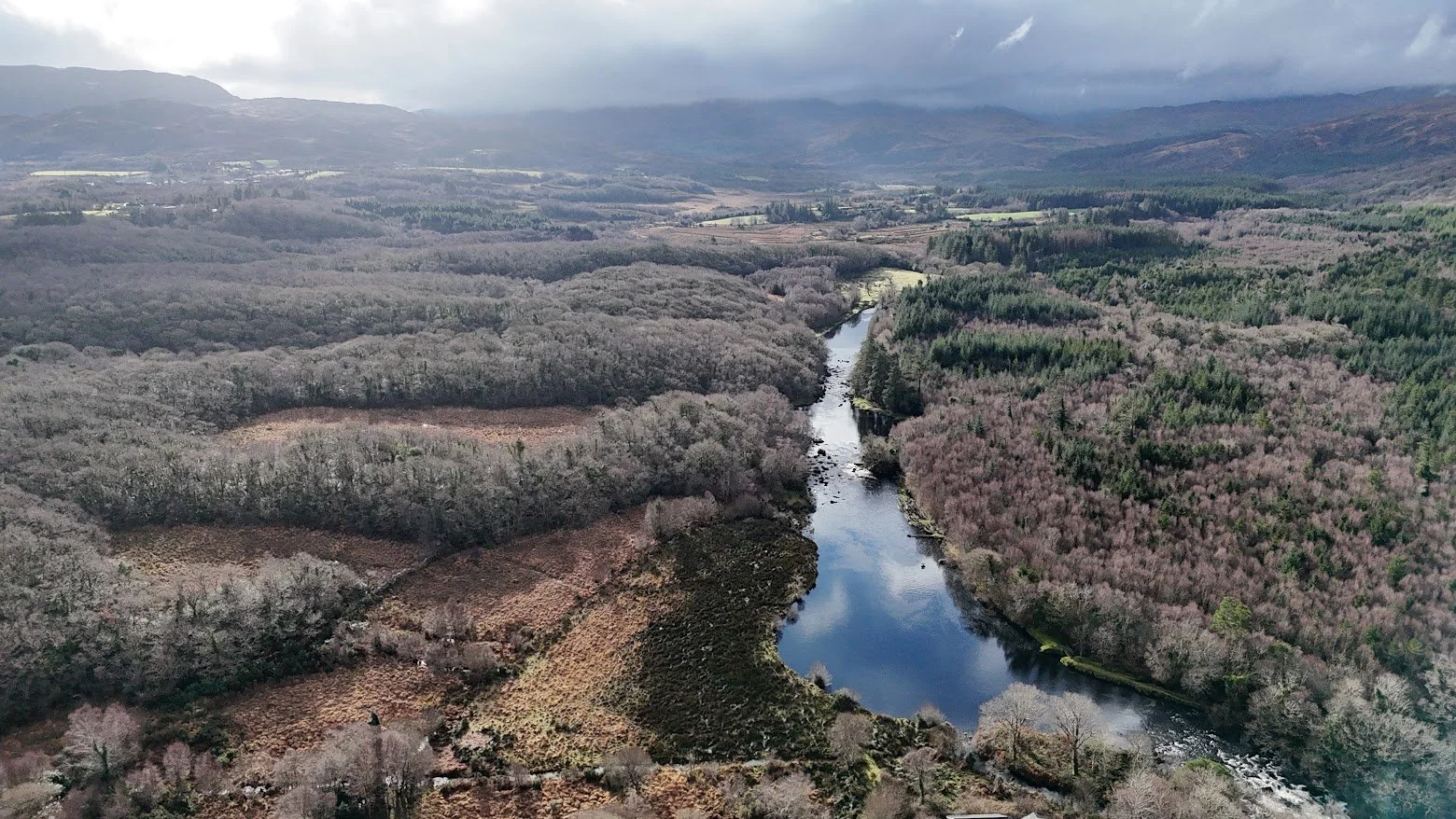
Sessile oak woods interspersed with bands of naturally treeless peatland at Glencar, Iveragh.
What challenges are we encountering?
Some of the challenges are practical. Upland sites can be steep, remote and difficult to access. Materials may need to be transported considerable distances, and fencing or other work may need to be carried out in challenging conditions.
There are also cultural barriers. Native woodland restoration remains an unfamiliar form of land management for many people, and it takes time to build confidence in a new approach.
However, the most significant challenges relate to ecology and regulation.
Ireland has important commitments to protect habitats and species under the habitats directive. We need to be extremely careful that woodland restoration does not inadvertently damage protected heathland, grassland, peatland or aquatic habitats.
The freshwater pearl mussel is one of the species that may present a particular challenge.
It is an extremely sensitive species, and some of Ireland’s remaining populations survive in rivers within the Iveragh landscape. Changes to water flow, sediment or water quality can affect its survival.
There is also concern in some quarters that increasing tree cover could reduce the amount of water reaching rivers and streams. This creates understandable caution around woodland restoration in freshwater pearl mussel catchments.
These concerns must be taken seriously. The project will need to demonstrate that woodland restoration can be planned and delivered in a way that protects water quality, hydrology and existing species.
This is precisely why an innovation project of this kind is needed. We are trying to work through these difficult questions with landowners, ecologists, state agencies and researchers rather than pretending that simple answers already exist.
What happens next?
The immediate priority is to complete the restoration plans for the 15 selected sites and move towards implementation.
At the same time, we are building the practical networks needed to deliver the work. A deer management team is currently using camera traps to assess deer numbers and determine the level of management that may be required. We are linking with fencing contractors, developing relationships with local service providers and growing the native trees that may be needed for targeted planting.
The project now has a strong team, supportive landowners and good momentum. The next stage is about converting that momentum into visible action on the ground.
Success will not mean covering the Iveragh uplands in trees. It will mean demonstrating that native woodland can return to carefully selected parts of these landscapes while protecting existing habitats, supporting farmers and respecting the ecological sensitivities of the area.
If we can develop that pathway successfully, the lessons from Iveragh could help inform a much wider conversation about the future of Ireland’s uplands and the place of native woodland within them. As highlighted by the recent land-use review, these new pathways are desperately needed for Ireland to achieve its broad-reaching goals.